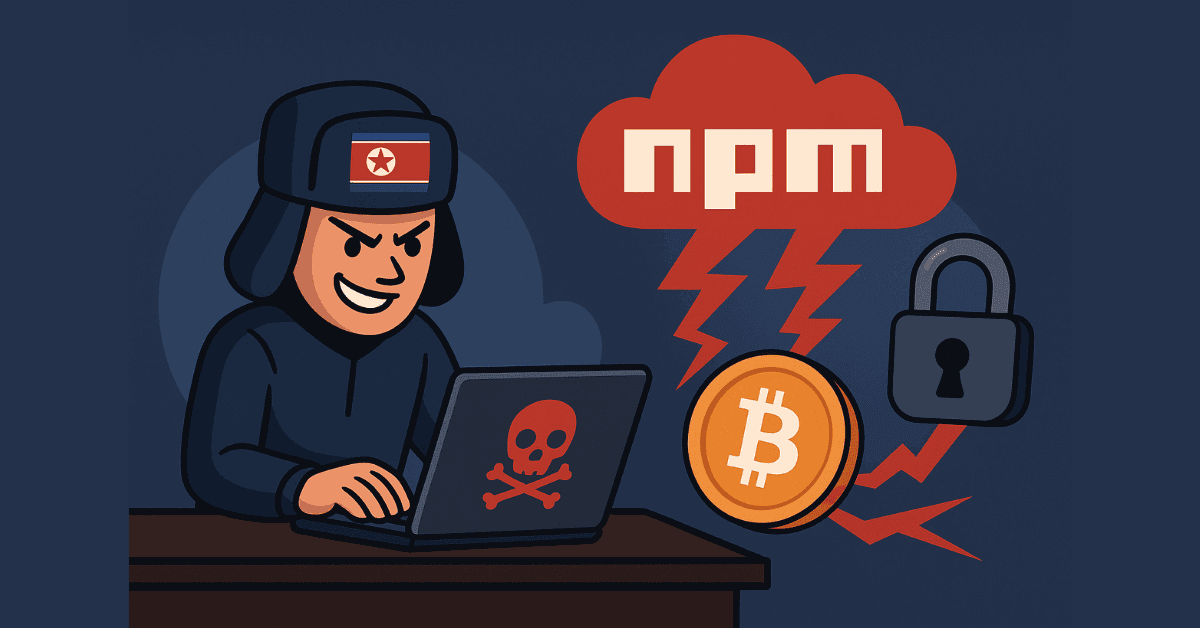
North Korea Launches npm Malware To Steal Crypto Keys
Over 300 Malicious npm Packages Targeting Blockchain
A North Korean hacking group has carried out a large-scale campaign by uploading more than 300 malicious packages to the npm registry. These packages impersonated legitimate and well-known libraries, embedding malicious code designed to steal user credentials and crypto wallet keys. The campaign, dubbed “Infectious Interview,” lured blockchain and Web3 developers through fake job interviews and fraudulent recruitment offers. Some of the infected packages reportedly reached over 50,000 downloads before being detected and removed, demonstrating the alarming scale and effectiveness of this operation.
Attack Mechanism and Warning Signs
The attackers employed a typosquatting technique—creating package names nearly identical to legitimate ones—to deceive developers. Inside these packages, they included memory-resident loaders capable of decrypting and executing malicious payloads without leaving traces on disk. Suspicious packages can often be recognized by subtle spelling errors in their names, unusual version numbers that are incompatible with prior releases, or obfuscated source code. Packages without a clear repository, anonymous authorship, or irregular release histories are also strong indicators of potential compromise.
Software Supply Chain Security Risks
This incident highlights the growing danger of attacks targeting the software supply chain. When a compromised npm dependency is installed, the malicious code can infiltrate both development and production environments. This may lead to stolen passwords, exposed crypto wallet keys, or unauthorized code execution within build pipelines. The threat extends beyond individual developers, posing significant risks to organizations and end users that rely on affected open-source components.
How to Detect and Respond to Malicious Packages
To identify suspicious npm packages, developers should carefully verify the author’s identity, release history, download statistics, and linked repository. Employing Software Composition Analysis (SCA) tools is a crucial step to detect hidden malicious patterns or abnormal code behavior. If a system has already installed a compromised package, immediate isolation is required. Developers should roll back to a safe version, reset credentials and wallet keys, review system logs for unauthorized access, and update dependency policies to prevent future exposure.
Long-Term Risk Mitigation Measures
Organizations must implement robust long-term measures to strengthen software supply chain security. Using lockfiles, pinning package versions, and maintaining internal registries can significantly reduce external risks. Package signing, manual dependency reviews, and integrating SCA scanning into the CI/CD pipeline are essential practices for prevention. Development teams should also limit write permissions within build environments and require human approval for introducing new dependencies.
GitHub and npm’s Response
Following the discovery of the campaign, GitHub and npm took swift action by removing the malicious packages and tightening account verification procedures for publishers. However, cybersecurity experts warn that the threat remains active, as attackers may continue releasing new variants of similar malware. Ultimately, developer awareness and proactive dependency management remain the most effective defenses against future supply chain attacks.
Disclaimer: The content above reflects the author’s personal views and does not represent any official position of Cobic News. The information provided is for informational purposes only and should not be considered as investment advice from Cobic News.