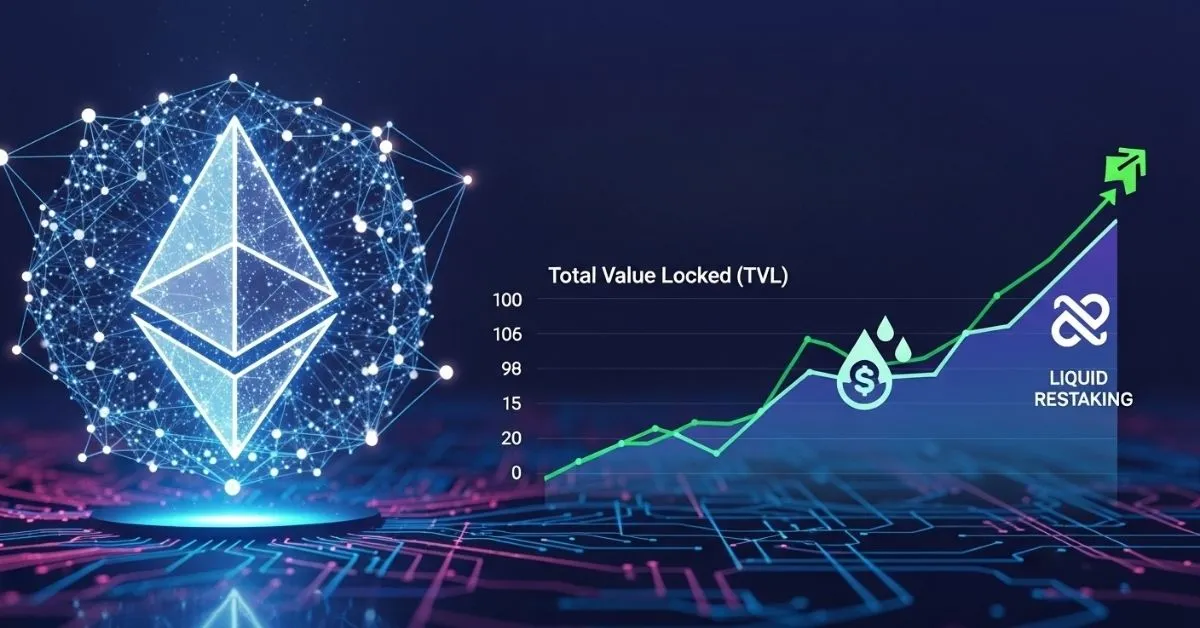
Ethereum DeFi TVL Soars: Restaking Drives New Highs
The decentralized finance (DeFi) landscape on the Ethereum network is buzzing with renewed activity, as its Total Value Locked (TVL) has surged to multi-month highs. This remarkable resurgence signals robust investor confidence and a vibrant, evolving ecosystem. At the heart of this growth lies the burgeoning popularity of innovative liquid restaking protocols, which are revolutionizing how users engage with staking and yield generation on Ethereum. This article delves into the mechanics behind this impressive growth and explores the profound implications of restaking for the future of decentralized finance.
Understanding Total Value Locked (TVL) In DeFi
Total Value Locked (TVL) serves as a critical metric for gauging the health and adoption of a blockchain's decentralized finance ecosystem. It represents the aggregate value of all crypto assets deposited, staked, or locked within various DeFi protocols operating on a particular network. For Ethereum, the recent surge in TVL to levels not seen in many months is a powerful testament to several factors: strong market sentiment, the inherent utility of its dApps, and perhaps most importantly, the introduction of novel financial instruments that provide compelling returns.
A high TVL indicates a robust and liquid market, suggesting that users are confident in the underlying security and profitability of the protocols. This influx of capital not only boosts the liquidity available for trading, lending, and borrowing but also creates a more stable foundation for the development and expansion of new decentralized applications within the Ethereum ecosystem. It's a clear signal that capital is flowing back into Ethereum-centric DeFi, reinforcing its position as a dominant force in the crypto space.
The Rise Of Liquid Restaking Protocols
While traditional staking on Ethereum locks up ETH to secure the network and earn rewards, liquid restaking protocols take this concept a step further. These innovative platforms allow users who have already staked their ETH (either directly or via Liquid Staking Tokens like Lido's stETH) to 'restake' these assets into additional protocols. This essentially allows the same underlying capital to contribute to the security of other decentralized services (known as Actively Validated Services or AVSs) while simultaneously earning extra yield.
Protocols like EigenLayer have pioneered this model, enabling staked ETH to be used as cryptographic collateral for a wider array of decentralized services beyond just Ethereum's consensus layer. This creates a powerful synergy: enhanced security for emerging protocols and increased capital efficiency for stakers. The ability to earn multiple layers of yield from a single underlying asset has proven incredibly attractive, drawing substantial amounts of capital back into the Ethereum DeFi space.
Enhanced Yield Opportunities And Capital Efficiency
The primary driver behind the explosive growth of liquid restaking is the promise of significantly enhanced yield opportunities. Instead of earning a single staking reward, participants can potentially accumulate rewards from Ethereum's base layer staking, plus additional rewards from the AVSs they are restaking to. This layered approach to yield generation stands in stark contrast to traditional methods, where capital often sits idle or generates only a singular return.
Furthermore, liquid restaking dramatically improves capital efficiency. Users no longer face the opportunity cost of having their valuable ETH locked away without generating additional utility. By essentially 'double-dipping' on security provisions and reward generation, investors can optimize their portfolios, attracting more sophisticated and yield-hungry capital. This newfound flexibility and potential for higher returns have undoubtedly played a crucial role in pushing Ethereum's TVL to new heights.
Implications For The Ethereum Ecosystem And Beyond
The robust growth propelled by liquid restaking has profound implications for the entire Ethereum ecosystem. Firstly, it funnels greater liquidity into DeFi protocols, making the market more resilient and efficient. Secondly, it provides a novel security mechanism for new decentralized applications and middleware services, allowing them to bootstrap trust and security by leveraging Ethereum's already established validator set, rather than building their own from scratch.
This innovation opens doors for a new wave of decentralized services that can inherit Ethereum's security without the prohibitive costs of establishing independent trust networks. As restaking continues to evolve, it is poised to become a foundational layer for decentralized infrastructure, fostering greater innovation and interconnectedness within the broader crypto space. However, it also introduces new layers of complexity and potential risks, necessitating careful due diligence from participants.
Conclusion
Ethereum's DeFi ecosystem is currently experiencing a vibrant revitalization, largely thanks to the groundbreaking capabilities offered by liquid restaking protocols. The climb to multi-month TVL highs underscores the success of these platforms in attracting and retaining capital by offering superior yield opportunities and enhanced capital efficiency. As this sector matures, restaking is set to become an increasingly integral component of Ethereum's economic security and innovation engine, promising an exciting future for decentralized finance.
Disclaimer: This article is intended solely to provide information and market insights at the time of publication. We make no promises or guarantees regarding performance, returns, or the absolute accuracy of the data. All investment decisions are the sole responsibility of the reader.