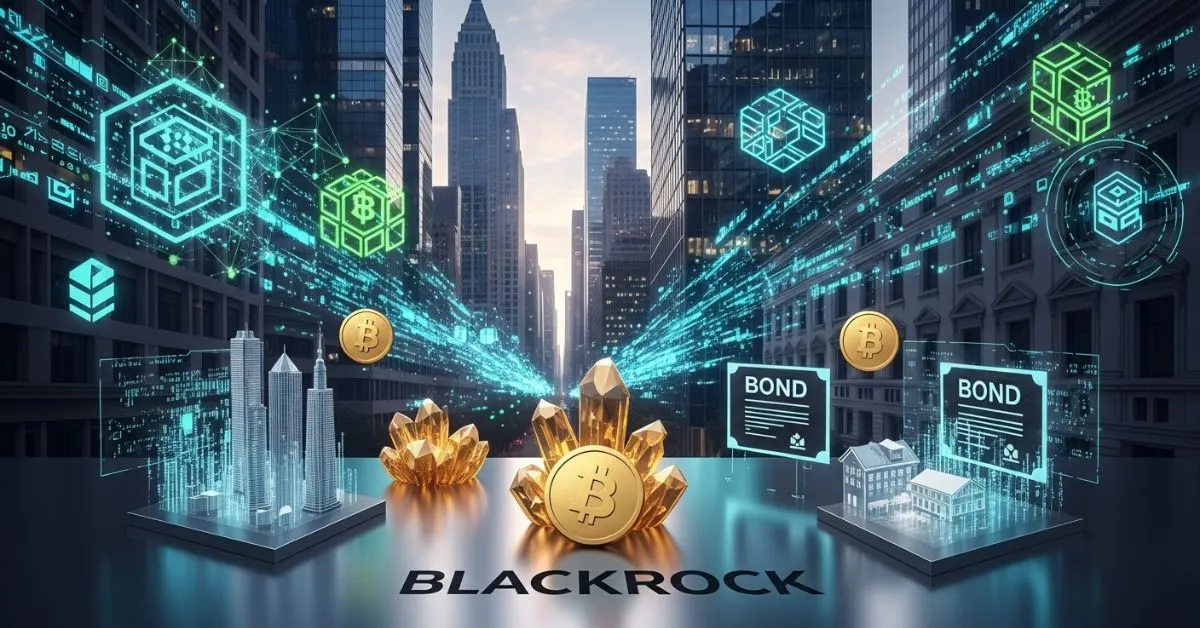
BlackRock, Tokenization & The Future Of Digital Finance
In a global financial landscape undergoing profound transformations, BlackRock, the world's largest asset manager, is asserting its pioneering position in shaping the future of digital finance. Under the leadership of CEO Larry Fink, the company is not only adapting but actively leading the wave of asset tokenization and the robust development of crypto ETFs, ushering in a new era for the market.
BlackRock's Strategic Shift
Larry Fink's perspective on cryptocurrencies has undergone a significant transformation. From once criticizing Bitcoin as an "index of money laundering" in 2017, Fink now views cryptocurrencies as a legitimate asset class, playing a role similar to gold in diversifying investment portfolios and acting as a hedge against inflation. This shift in mindset reflects a broader trend on Wall Street and the rapid convergence of traditional finance (TradFi) and digital assets.
The Crypto ETF Boom
BlackRock has demonstrated its commitment to digital assets through the successful launch of its spot Bitcoin ETF (IBIT) and Ethereum ETF (ETHA). The iShares Bitcoin Trust (IBIT) has reached an astonishing milestone of nearly $100 billion in Assets Under Management (AUM), with some sources indicating $93 billion within just two years. IBIT stands as one of the largest crypto ETFs in the market, attracting significant institutional and retail investors, with approximately 50% of the demand coming from retail investors and three-quarters of those being new BlackRock clients. Similarly, BlackRock's Ethereum ETF (ETHA) now manages $17 billion in assets within two years of its launch. This strong growth underscores the increasing demand for regulated crypto investment products.
Asset Tokenization: The Next Wave Of Opportunity
Larry Fink has described tokenization as the "next big financial wave" and the "next wave of opportunity" for BlackRock over the coming decades. BlackRock aims to tokenize $10 trillion in assets by 2030. The firm believes that digitizing traditional assets such as real estate, equities, and bonds will create unprecedented efficiencies, with faster settlements and clearer ownership records.
BUIDL Fund: Pioneering Tokenization
The clearest testament to BlackRock's tokenization vision is the BlackRock USD Institutional Digital Liquidity Fund (BUIDL). It is currently the largest tokenized money market fund available, managing $2.8 billion in assets. Launched in March 2024 and partnered with Securitize, BUIDL offers 24/7 trading and instant settlements—features largely absent in traditional markets. While initially built on Ethereum, some reports also indicate its operation across other networks such as Avalanche, Aptos, and Polygon.
Scale And Growth Potential Of The Tokenization Market
Forecasts from reputable institutions predict a promising future for the tokenization market:
- Boston Consulting Group (BCG) and ADDX estimate the asset tokenization market will reach $16.1 trillion by 2030. This figure could represent 10% of global GDP by the end of the decade. In a best-case scenario, the market size could even reach $68 trillion.
- As of 2022, the estimated value of tokenized assets was $310 billion.
- McKinsey forecasts the market capitalization of tokenized assets to hit $2 trillion by the end of the decade, potentially reaching $4 trillion in a bullish scenario.
- The World Economic Forum previously estimated tokenization would account for 10% of global GDP by 2027.
- JPMorgan strategists have called tokenization a "significant leap" for the $7 trillion money market fund industry.
- Expected growth is across various real-world assets (RWA), including real estate, equities, bonds, investment funds, and even less traditional assets such as car fleets and patents.
Benefits Of Asset Tokenization
Tokenization offers several groundbreaking benefits for the financial market:
- Enhanced Liquidity: Makes traditionally illiquid assets more easily tradable.
- Fractional Ownership: Allows smaller investors to access high-value assets by purchasing a fraction, reducing investment thresholds from millions to thousands of dollars.
- 24/7 Trading and Instant Settlements: Eliminates trading hour restrictions and reduces settlement times from days to minutes.
- Reduced Costs: Automates and streamlines back-office processes, potentially cutting issuing and trading costs by up to 50%.
- Transparency and Clearer Ownership Records: Blockchain provides an immutable ledger, enhancing transparency and reliability of ownership.
Conclusion
BlackRock, with its strategic vision and robust investment in both crypto ETFs and asset tokenization, is laying the groundwork for a more efficient, transparent, and accessible global financial system. This shift, led by one of the world's largest asset managers, not only validates the legitimacy of digital assets but also promises a financial revolution that will reshape how we invest and manage assets for decades to come. The wave of tokenization is here, and BlackRock is at the forefront of this transformation.
The content above reflects the author's personal views only and does not represent any official stance of Cobic News. The information provided is for reference purposes only and should not be considered investment advice from Cobic News.