
Bitcoin Recovers Swiftly After $1.9 Billion Liquidation
Bitcoin's Swift Recovery: Analyzing Market Resilience After A $1.9 Billion Liquidation Event
The cryptocurrency market once again demonstrated its remarkable resilience as Bitcoin (BTC) rapidly climbed back to the $115,000 mark after a massive $1.9 billion derivatives liquidation cascade on Friday. This event, characterized by a sudden sell-off that wiped out overleveraged positions, initially caused alarm but ultimately reinforced confidence in the robustness of the world's leading digital asset.
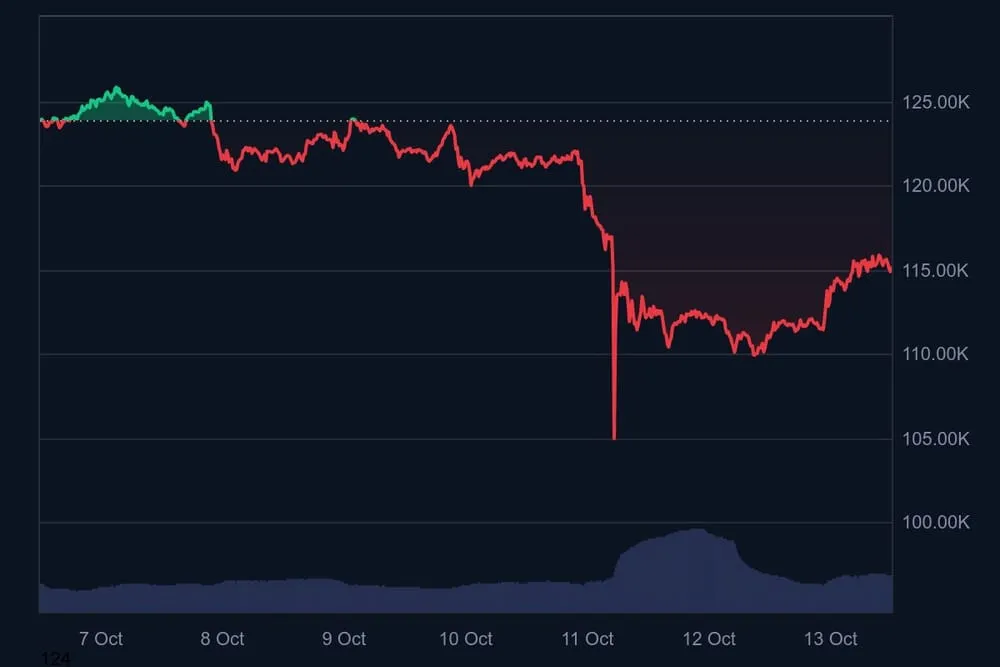 Sources: Coinmarketcap
Introduction To Market Volatility
Volatility has always been an inherent part of the cryptocurrency market, and Bitcoin, as its flagship asset, frequently experiences sharp price swings. However, its ability to bounce back from significant market shocks is what sets it apart. The recent liquidation event is a prime example of how the market can self-correct and find equilibrium, often emerging stronger after shedding weaker, overleveraged positions.
Understanding Liquidation Cascades In Cryptocurrency Markets
Liquidation occurs when a leveraged trading position no longer meets the exchange's margin requirements, forcing its closure to prevent further losses. In the crypto market, where derivatives trading is prevalent, a sharp price drop can trigger a "liquidation cascade." This means the forced closure of one large position pushes the price down further, causing subsequent liquidations, creating a downward spiral. While seemingly detrimental, liquidations also serve to 'cleanse' the market of excessive leverage, paving the way for healthier growth.
The Recent $1.9 Billion Liquidation: A Detailed Look
Last Friday, the Bitcoin market witnessed one of the largest liquidation events of the year, with a staggering $1.9 billion worth of long (buy) positions being forcefully closed. This incident led to a significant price dip, momentarily shedding a considerable portion of Bitcoin's value. Analysts suggest this could have been triggered by a combination of profit-taking after a strong rally, coupled with broader macroeconomic concerns or the latest economic indicators. However, what stands out is that instead of a prolonged downturn, the market quickly absorbed the selling pressure and began its recovery trend.
Factors Driving Bitcoin's Rapid Rebound To $115,000
The swift recovery of Bitcoin is not accidental but supported by several underlying factors:
Strong Underlying Demand: Despite short-term volatility, the fundamental demand for Bitcoin remains robust, particularly from institutional investors. Inflows into spot Bitcoin ETFs continue to be a significant driving force.
Reduced Leverage: Liquidations, while painful for those affected, effectively reduce the overall leverage in the system. This creates a healthier market less susceptible to minor price fluctuations.
Macroeconomic Environment: Expectations regarding the U.S. Federal Reserve's policies and inflation data can influence investor sentiment. Potential signs of easing monetary policy or economic stability can boost confidence in risk assets like Bitcoin.
Halving Narrative: Bitcoin's recent halving event reinforced its scarcity narrative and long-term appreciation potential, attracting investors who believe in its intrinsic value.
Whale Accumulation: On-chain data often indicates that large investors, or "whales," tend to buy during price dips, viewing them as opportunities to accumulate assets at a better price.
The Evolving Landscape Of Institutional Adoption
The introduction of Bitcoin Spot ETFs has significantly altered market dynamics. These investment vehicles provide a regulated and accessible avenue for traditional retail and institutional investors to gain exposure to Bitcoin. The consistent influx of capital into these ETFs not only signifies growing acceptance but also provides a substantial layer of support, helping to absorb sell-offs and stabilize prices. This fosters a more mature market, less prone to short-term sentiment swings.
Market Outlook And Future Prospects
Given this impressive recovery, the question remains: is Bitcoin's bullish trend sustainable? While potential challenges such as evolving regulatory landscapes or sudden macroeconomic shifts could pose headwinds, the long-term outlook for Bitcoin remains strong. Its position as an inflation hedge, finite supply, and global decentralized network continue to be key attractions. Its ability to consistently weather liquidations and rebound strongly reinforces the belief that Bitcoin is on a sustainable growth trajectory, reshaping the global financial landscape.
Conclusion: Bitcoin's Enduring Strength
The $1.9 billion liquidation event and Bitcoin's subsequent rapid recovery serve as a powerful testament to the resilience and strength of the cryptocurrency market. It highlights that despite its inherent volatility, the world's premier digital asset is maturing and gaining broader acceptance. For investors, it's a reminder of the importance of a long-term strategy and Bitcoin's enduring capacity to withstand market challenges.
Disclaimer: The content above reflects the author’s personal views and does not represent any official position of Cobic News. The information provided is for informational purposes only and should not be considered as investment advice from Cobic News.